Origins of Barong
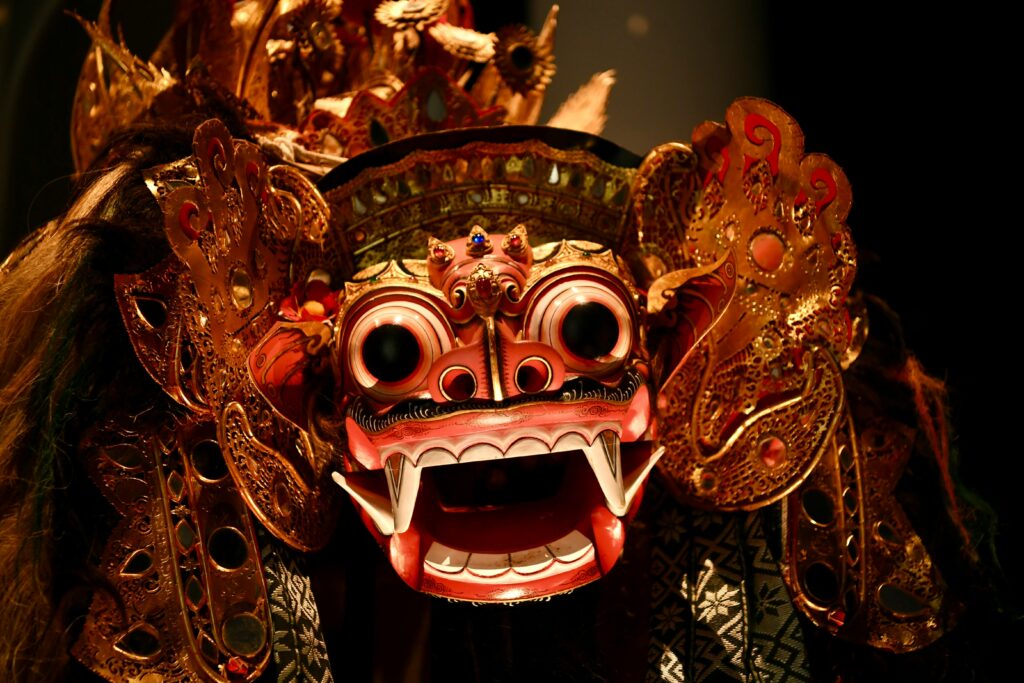
Barong is one of the most iconic characters in Balinese mythology and performance art. Rooted in ancient animistic traditions and later influenced by Hindu culture, Barong represents the spirit of protection and goodness. The word Barong is believed to come from the Sanskrit word Bahruang, meaning “bear” or “a creature with strength.”
In Balinese mythology, Barong is considered the king of spirits and the protector of villages. He takes the form of a mystical creature—half animal, half lion—embodying positive forces that guard humanity against evil. Every village in Bali often has its own form of Barong, with variations such as Barong Ket (lion-like), Barong Bangkal (boar), Barong Macan (tiger), and Barong Landung (giant figures).
The most popular narrative featuring Barong is the eternal battle between Barong and Rangda, the demon queen who represents chaos and darkness. Their struggle symbolizes the balance of good and evil, a central concept in Balinese philosophy and life.
Development of Balinese Dance (BalJ)
Balinese dance, often abbreviated informally as BalJ (Bali dance), has developed as a cultural expression that combines ritual, storytelling, and entertainment. Dance in Bali is inseparable from religion and community ceremonies, often performed as offerings to the gods.
Historically, Balinese dances were not merely art forms but sacred rituals. Movements, expressions, and gestures carry symbolic meanings that communicate stories from Hindu epics such as the Ramayana and Mahabharata. Over centuries, these performances became refined, balancing spiritual devotion with aesthetic beauty.
One of the most famous classical dances is the Legong, traditionally performed by young girls with graceful movements, intricate eye gestures, and expressive hand positions. Other notable dances include Kecak (the “monkey chant” dance), Topeng (mask dance), and Baris (warrior dance). Each carries its own role—whether to entertain, to honor the gods, or to dramatize ancient stories.
Cultural Significance Today
Both Barong and Balinese dance remain central to the island’s cultural identity. Tourists may witness performances in temples, villages, and cultural centers, but for the Balinese people, these arts are living traditions, tied deeply to spirituality and community life.
Barong performances often appear during temple festivals and ceremonies to protect the village from negative spirits. Meanwhile, Balinese dances continue to evolve, blending traditional elements with modern creativity, yet always keeping their spiritual roots intact.
Through these art forms, Bali tells stories not just of gods and demons, but of balance, devotion, and the enduring connection between humanity and the divine.